
Maryland Tax Incentives
What to do when the Affordable Care Act Impacts Case Settlements:
The Benefits of an Accessibility-Focused Case Evaluation
A White Paper by Michael Fiore
One of the likely unintended consequences of the Affordable Care Act is that Special Need Trusts may be impacted due to settlement criteria that can be based on past, present, and future medical needs.
Teleseminars on Disability, Diversity, and the Changing Workforce. One hour of learning that can change the way that you think.
Tech Update: Read an article about the implications of 32-bit and 64-bit processors for Assistive Technology Solutions.
Looking for qualified candidates with disabilities?

A Job Board for job seekers with disabilities and the businesses looking to hire them.
Maryland Tax Incentives
- Apprenticeships and Training
- Businesses That Create New Jobs Tax Credit
- Demonstration and Loan Library
- Department of Business and Economic Development
- Division of Rehabilitation Services
- Division of Rehabilitation Services – Customized Vocational Training
- Division of Rehabilitation Services – Office Locations
- Division of Rehabilitation Services – Services for Businesses
- Economic Development Opportunities Program Fund (Sunny Day)
- Employer-Provided Long-Term Care Insurance Tax Credit
- Maryland Chamber of Commerce
- Maryland Disability Employment Tax Credit
- Maryland Economic Development Assistance Authority and Fund
- Maryland’s Enterprise Zone Tax Credit
- Maryland Small Business Development Financing Authority
- Maryland Technology Assistance Program
- Military Personnel and Veteran-owned Small Business Loan Program
- Neighborhood BusinessWorks
- One Maryland Economic Development Tax Credit
- Regional Institution Strategic Enterprise
Apprenticeships and Training
Apprenticeship is a voluntary, industry-driven program which is sponsored by employers, employer 06associations, and jointly by management and labor. An apprentice, as an employee, receives supervised, structured, on-the-job training combined with related technical instruction in a specific occupation.
The person hired as the apprentice could be someone with a disability who needs specialized on-the-job training to obtain employment.
Businesses That Create New Jobs Tax Credit
Businesses located in Maryland that create new positions and establish or expand business facilities in the state may be entitled to a tax credit. To be eligible for the tax credit, businesses must first have been granted a property tax credit by a local government of Maryland for creating the new jobs. The credit may be taken against corporate income tax, personal income tax or insurance premiums tax. The credit may be applied to only one of these tax types in addition to the property tax. Sole proprietorships, corporations and pass-through entities, such as partnerships, subchapter S corporations, limited liability companies and business trusts may claim the tax credit.
The new positions that are created because of the New Jobs Tax Credit could mean more employment possibilities for workers with disabilities.
Demonstration and Loan Library
Maryland Technology Assistance Program has a library of assistive technology. This Assistive Technology library is a free library available to Marylanders with disabilities, their families, and professionals and educators who work with people with disabilities. You can make an appointment to meet with their technology specialist for hands-on demonstrations of devices, or you can borrow devices from the library. Items are generally on loan for 1 to 4 weeks.
Department of Business and Economic Development
The Department of Business and Economic Development mission is to create, attract and retain jobs while promoting Maryland’s economy.
Division of Rehabilitation Services
Division of Rehabilitation Services offers programs and services that help people with disabilities go to work and become self-sufficient.
Division of Rehabilitation Services – Customized Vocational Training
This web page has information on 2 methods of vocational training funded through the Division of Rehabilitation Services: On-the-Job Training and Customized & Partnership Training.
Division of Rehabilitation Services – Office Locations
This web page has the contact information for all of the Division of Rehabilitation Services offices in Maryland, including its headquarters located in Baltimore.
Division of Rehabilitation Services – Services for Businesses
The Division of Rehabilitation Services helps Maryland businesses recruit and keep qualified, valuable employees. In 2014, the Division of Rehabilitation Services matched 2,533 qualified individuals to job openings in Maryland’s businesses.
The Division of Rehabilitation Business Services also serves as a resource on disability and employment matters, including:
- Disability awareness training.
- Workforce diversity and inclusion initiatives.
- The Americans with Disabilities Act and options/solutions for reasonable accommodations.
- Worksite consultations to help businesses hire qualified workers and retain valued employees with disabilities.
Additionally, the Division of Rehabilitation Services Business Services Team can provide guidance on federal and state disability tax credits.
Economic Development Opportunities Program Fund (Sunny Day)
The Sunny Day fund supports extraordinary economic development opportunities that create and retain employment as well as create significant capital investments. Projects must generate significant jobs in areas of high unemployment; they are evaluated on a competitive basis and must be consistent with the state's strategic economic development plan.
Participants in this program must provide a minimum capital investment of at least five times the amount of the Sunny Day assistance. Applicants must possess a strong balance sheet and be credit worthy.
The employment opportunities created or retained as a result of this program could benefit workers who have disabilities.
Employer-Provided Long-Term Care Insurance Tax Credit
An employer, including organizations exempt from taxation under §501(c)(3) or (4) of the Internal Revenue Code that provides long-term care insurance as part of an employee benefit package may claim a credit for costs incurred during the taxable year. The credit may be taken against corporate income tax, personal income tax, insurance premiums tax or public service company franchise tax. The same credit may not, however, be applied to more than one tax type. Sole proprietorships, corporations and pass-through entities, such as partnerships, subchapter S corporations, limited liability companies and business trusts may claim the tax credit.
With the Employer-Provided Long-Term Care Insurance Tax Credit both the employer and employee will benefit. The employee will get long-term care insurance from his/her employer and the employer will receive a tax break for providing it.
Maryland Chamber of Commerce
The Maryland Chamber of Commerce is Maryland’s leading statewide business advocacy organization. The Mission of the Maryland Chamber of Commerce is to maximize opportunities for its members and their employees to grow and prosper.
Maryland Disability Employment Tax Credit
Businesses that employ persons with disabilities, as determined by the Division of Rehabilitation Services in the Maryland State Department of Education and/or by the Maryland Department of Labor, Licensing and Regulation, may be eligible for a tax credit for wages paid to, and for childcare expenses and for transportation expenses paid on behalf of qualified employees.
The credit may be taken against corporate income tax, personal income tax, state and local taxes withheld (for certain tax-exempt organizations only), insurance premiums tax or public service company franchise tax. The same credit may not, however, be applied to more than one tax type.
This tax credit can be used as an incentive for Maryland businesses to hire and create new jobs for workers with disabilities.
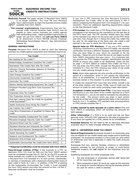
Maryland Business Tax Credit over PDF
Maryland Economic Development Assistance Authority and Fund
There are five financing capabilities offered through the Maryland Economic Development Assistance Authority and Fund , with assistance being provided to the business community and political jurisdictions. To qualify for assistance from the Maryland Economic Development Assistance Authority and Fund, applicants are restricted to businesses located within a priority funding area and an eligible industry sector. With a few exceptions, assistance cannot exceed 70 percent of the total project costs.
Financial assistance from this program can be used to purchase ADA compliant property or renovate property making it more accessible to employees with disabilities.
Maryland’s Enterprise Zone Tax Credit
The Enterprise Zone Tax Credit is an one-to-three year Maryland state tax credit available to employers in the designated Enterprise Zones who hire for newly created full-time jobs. A one-time credit for each new employee and a three-year credit for hiring an employee who is economically disadvantage (as determined by the Maryland Job Service).
Often, people with disabilities live in areas that are depressed and in need of revitalization. Hiring disabled individuals from these zones would reverse the unemployment trend among this population and give their communities a much needed lift.
Maryland Small Business Development Financing Authority
Maryland Small Business Development Financing Authority promotes the viability and expansion of businesses owned by economically and socially disadvantaged entrepreneurs. It can help with working capital, supplies and materials, machinery and equipment acquisition, land acquisition or real estate improvements.
Assistance is also available for the purchase of an existing franchise, construction or renovation and franchise fees or obtaining bid, performance and payment bonds for contracts, which receive the majority of their funding from federal, state or local government.
Maryland Small Business Development Financing Authority clients include all small businesses unable to obtain adequate business financing on reasonable terms through normal financing channels.
An entrepreneur with a disability may qualify for assistance through the Maryland Small Business Development Financing Authority to start or grow a business.
Maryland Technology Assistance Program
The Maryland Technology Assistance Program web site furnishes information on Assistive Technology devices and services for people with disabilities. This site also includes information and resources to help people with disabilities live independent, full lives.
Assistive technology is any device that enables a person with a disability to be more functional. A good example of Assistive Technology in the workplace is a voice recognition system for the computer. By recognizing the user’s voice, this device will type whatever is said into its microphone. With this technology, the employee uses the computer much faster because he/she doesn’t use a keyboard to operate it. Because of the increased productivity, it is wise for an employer to invest in Assistive Technology for disabled employees.
Military Personnel and Veteran-owned Small Business Loan Program
The Military Personnel and Veteran-owned Small Business Loan Program provides no interest loans of up to $50,000, from one to eight years, for businesses owned by military reservists, veterans, National Guard personnel and for small businesses that employ or are owned by such persons. Eligible applicants include businesses owned by military reservists and National Guard members called to active duty, and small businesses with fewer than 50 employees that employ them.
No interest loans range from $1,000 to $50,000. Loan maturity will be from one to eight years. The loan repayment period usually will not exceed the useful life expectancy of the equipment to be purchased.
Neighborhood BusinessWorks
Neighborhood BusinessWork's loan program provides gap financing, i.e. subordinate financing, to new or expanding small businesses and nonprofit organizations in Sustainable Communities throughout the State.
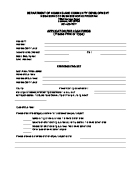
Neighborhood BusinessWorks Application Package docx
One Maryland Tax Credit
Businesses that invest in an economic development project in a “qualified distressed county” may qualify for project tax credits of up to $5 million and start-up tax credits of up to $500,000.
Up to $5 million based on qualifying costs and expenses incurred with the acquisition, construction, rehabilitation, installation, and equipping of an eligible project. Eligible costs include land acquisition, performance and contract bonds, insurance, arc4hitectural and engineering services, environmental mitigation, and utility installation. Eligible costs must be at least $500,000. Project costs exceeding $5 million are not eligible.
Expense of moving a business from outside Maryland and for the costs of furnishing and equipping a new location qualify under this provision. Eligible costs also include the cost of fixed telecommunications, office equipment, and office furnishings. Credit cannot exceed the lesser of $500,000 of eligible costs or $10,000 times the number of new, positions created.
An employer can use the One Maryland Tax Credit to offset the cost of making a workplace ADA compliant, allowing for more workers with disabilities to be employed there.
For additional One Maryland Tax Credit information.
Regional Institution Strategic Enterprise
A Regional Institution Strategic Enterprise Zone is a geographic area that has nexus (a strong connection) with a qualified institution and is targeted for increased economic and community development. Qualified institutions include institutions of higher education, regional higher education centers or non-profits affiliated with a federal agency.
The purpose of the Regional Institution Strategic Enterprise Zone program is to access institutional assets that have a strong and demonstrated history of commitment to economic development and revitalization in the communities in which they are located. Qualified institutions and local governments develop a targeted strategy to use the institutional assets and financial incentives to attract businesses and create jobs within the zone.
Businesses locating in a Regional Institution Strategic Enterprise Zone or an existing business doing a significant expansion there may qualify for real property tax credits and income tax credits related to capital investment and job creation.
Job seekers with disabilities who live in these zones may benefits from the job creation generated by this program.
Application Instructions for Qualified Institutions PDF
Application Instructions for Designation Request PDF
